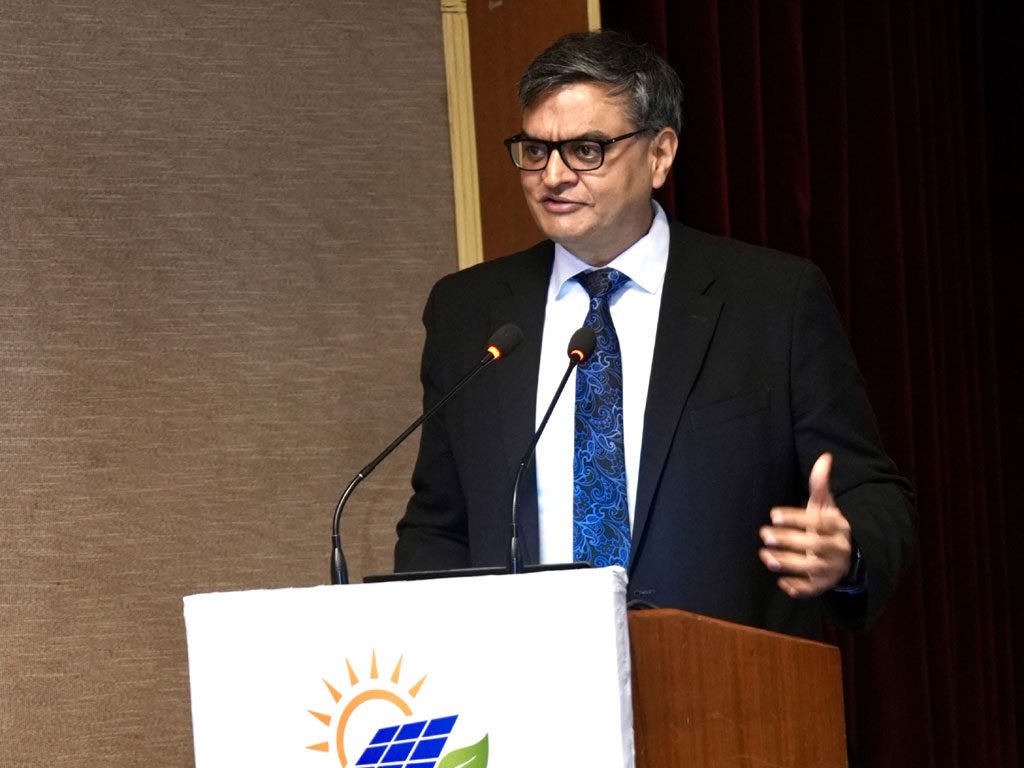
Global energy crises should be viewed as opportunities to accelerate the transition to solar power rather than reasons to delay it, Ashish Khanna, Director General of the International Solar Alliance (ISA), said while presenting a global perspective on the future of renewable energy. Addressing SolarFutures 2026: Next-Gen Solar India, he argued that the future of solar lies not merely in adding generation capacity but in building systems capable of integrating, managing and decentralising renewable energy at scale.
The conference, organised by Sustainability Karma in partnership with the National Institute of Solar Energy (NISE) in New Delhi, centred on the theme “Powering a Future-Ready Solar India: From Local Innovation to Global Leadership.” It brought together policymakers, industry leaders and technical experts to deliberate on the next phase of India’s solar energy journey and its global implications.
Khanna began by referring to the Hormuz crisis as an illustration of the world’s continued dependence on conventional energy sources and the resulting volatility in energy prices. Such developments, he said, reinforce the urgency of accelerating solar deployment. Recalling advice from one of his mentors—”Never waste a crisis”—he suggested that every disruption in conventional energy markets presents an opportunity to expand renewable energy adoption. He also highlighted the International Solar Alliance’s efforts to promote solar energy globally and linked these initiatives to international climate commitments under the COP framework.
Placing the transition in a broader global context, Khanna observed that electricity currently accounts for only about one-fifth of the world’s total energy consumption, with many heating applications yet to be electrified. He noted that India also has considerable scope to expand electrification in these sectors. While acknowledging that some countries continue investing in natural gas and nuclear power, he described solar energy as the fastest-growing source of electricity because of its ability to be deployed rapidly and at increasingly competitive costs.
Khanna identified several trends that he believes will shape the future of the sector. He pointed to the growing adoption of electric vehicles and the debate over electric cooking as examples of how electrification could significantly increase future electricity demand. At the same time, he cautioned that expanding solar generation alone would not guarantee a successful energy transition. Using Germany’s experience of surplus daytime solar generation and depressed electricity prices as an example, he argued that countries must invest in technologies and market mechanisms capable of absorbing excess daytime generation while meeting evening demand through effective storage and system integration.
Decentralisation, according to Khanna, will define the next stage of solar development. He encouraged countries to complement utility-scale projects with distributed solar systems and highlighted India’s progress through initiatives such as PM Surya Ghar, balcony solar systems, agricultural solarisation and solar-powered irrigation pumps. He suggested that India’s experience could offer valuable lessons for African countries seeking to expand access to affordable clean energy. He also stressed the importance of research to address land constraints, pointing to innovations including building-integrated photovoltaics and photovoltaic coatings designed to improve the efficiency of urban infrastructure while enhancing long-term energy security.
Looking ahead, Khanna underscored the scale of investment required for the global energy transition, while noting that the continuing decline in solar technology costs is strengthening the sector’s competitiveness. He observed that sustainable energy accounted for the overwhelming majority of new power plants commissioned globally in the previous year, with solar contributing the largest share of those additions. His address reflected the conference theme—Powering a Future-Ready Solar India: From Local Innovation to Global Leadership—by presenting India as both a beneficiary and a contributor to the global transformation towards decentralised, affordable and innovation-led solar energy systems.