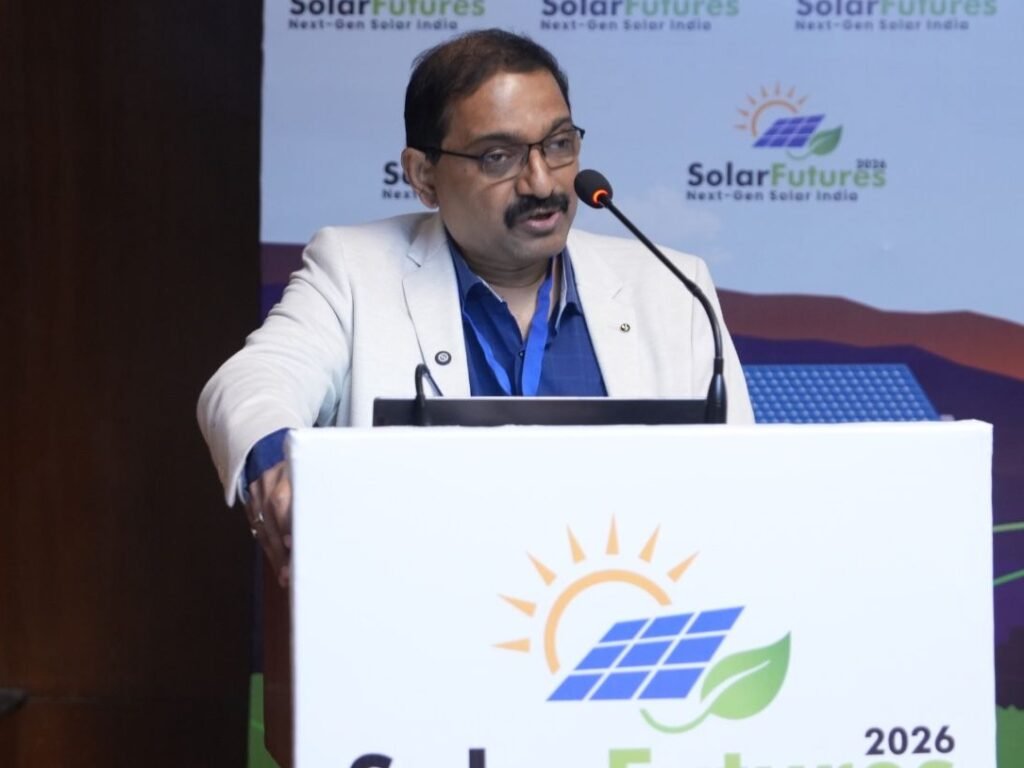
Technological innovation alone will not be enough to accelerate India’s renewable energy transition unless it is supported by effective public communication and wider social participation, Prof (Dr) K G Suresh, Director of India Habitat Centre, said while delivering the closing remarks at SolarFutures 2026: Next-Gen Solar India. He argued that translating technical knowledge into public understanding is essential for making solar energy a nationwide movement rather than a subject confined to expert discussions.
Organised by Sustainability Karma in partnership with the National Institute of Solar Energy (NISE) in New Delhi, the conference was held under the theme of Powering a Future-Ready Solar India: From Local Innovation to Global Leadership. The event concluded with a call to strengthen public engagement alongside technological and policy advances in the renewable energy sector.
In his concluding address, Prof Suresh stressed that meaningful progress in renewable energy requires collaboration among specialists from diverse disciplines. Bringing together experts from different fields, he said, helps optimise solutions and accelerates the adoption of solar energy by combining technical knowledge with practical implementation strategies. Equally important, he added, is ensuring that the outcomes of such collaborations are communicated effectively to the wider public.
Highlighting the importance of communication, Prof Suresh observed that awareness initiatives play a decisive role in shaping public attitudes towards clean energy. He referred to the Prime Minister’s Mann Ki Baat radio programme as an example of how sustained communication can influence public awareness and encourage participation in national development initiatives. According to him, such efforts have helped integrate solar energy into India’s broader development narrative, making renewable energy more relatable to ordinary citizens rather than limiting it to policy or technical discussions.
Prof Suresh further argued that conversations on renewable energy should extend far beyond conferences and industry forums. For India’s clean energy ambitions to succeed, discussions must reach households, local communities and the broader public. He maintained that communication serves as the bridge between innovation and implementation by helping people understand the practical benefits of renewable energy and encouraging wider participation in the transition.
Addressing the broader social dimensions of the transition, he concluded by highlighting the importance of bridging the digital divide. He said non-conventional energy solutions can achieve large-scale adoption only when they are accessible, available and affordable to all sections of society. These principles, he suggested, are essential for ensuring that the benefits of renewable energy are shared equitably across the country.
Closing the conference, Prof Suresh reinforced the idea that India’s solar journey is as much about people as it is about technology. His remarks echoed the conference theme—Powering a Future-Ready Solar India: From Local Innovation to Global Leadership—by underscoring that public awareness, inclusive communication and accessibility will be critical in transforming technological progress into a truly nationwide clean energy movement.