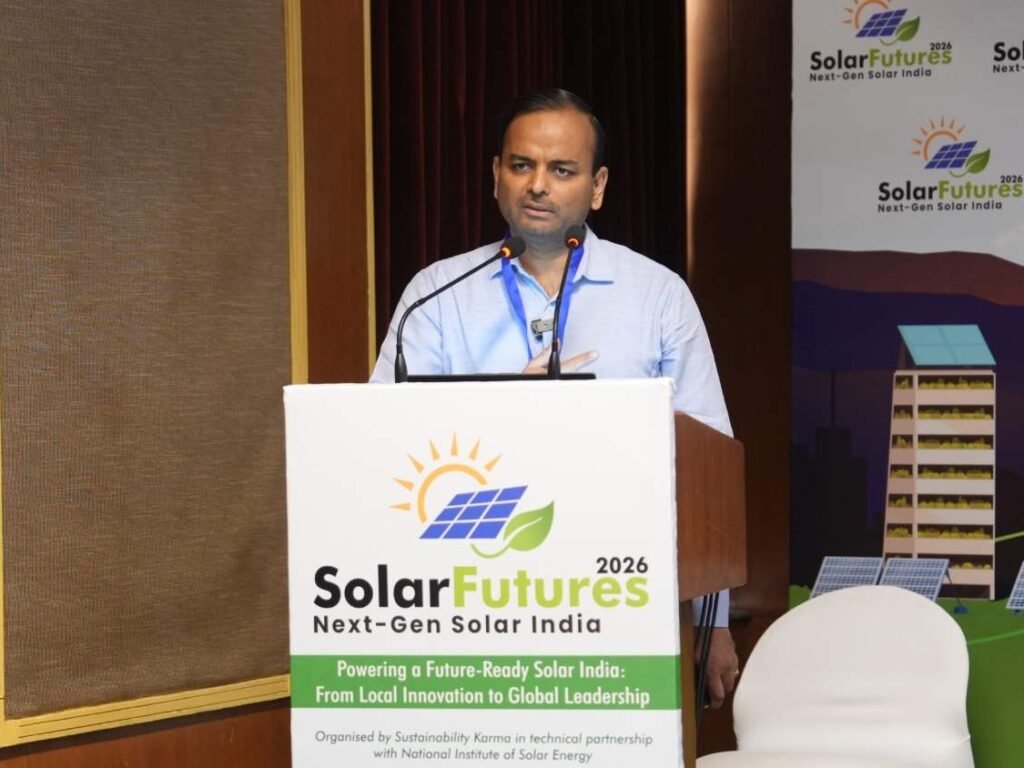
India’s renewable energy transition must move beyond adding generation capacity to strengthening electricity distribution networks, improving grid planning and optimising demand, according to Abhishek Ranjan, CEO of BSES Rajdhani Power Limited. Delivering a keynote address at SolarFutures 2026: Next-Gen Solar India, he said the country’s vast solar potential can be fully realised only if distribution companies and power systems are equipped to absorb and efficiently manage growing volumes of renewable energy.
The conference, organised by Sustainability Karma in partnership with the National Institute of Solar Energy (NISE) in New Delhi, explored the theme Powering a Future-Ready Solar India: From Local Innovation to Global Leadership. The event brought together policymakers, industry leaders and energy experts to discuss the technological, regulatory and market reforms required to accelerate India’s clean energy transition.
Reflecting on the evolution of BSES and its role in India’s renewable energy journey, Ranjan said the country’s expanding solar ecosystem presents opportunities that extend well beyond electricity generation. He described solar energy as an enabler of self-reliance, inclusive development and improved quality of life, particularly for communities at the lower end of the economic spectrum. In this context, he stressed that the distribution sector will play a decisive role in supporting the next stage of renewable energy deployment by ensuring that electricity networks evolve alongside generation capacity.
A central theme of his address was the need for better grid planning based on actual consumer demand. Ranjan advocated a bottom-up approach to electricity planning, arguing that demand patterns should shape infrastructure development rather than the other way around. As renewable energy penetration increases, he said, utilities must place greater emphasis on demand forecasting and encourage electricity consumption during periods of peak solar generation. Such demand optimisation, he suggested, would improve system efficiency while making better use of available renewable energy resources.
Ranjan identified grid capacity and reliability as two of the most significant challenges facing the sector. He noted that inadequate grid absorption capacity continues to constrain renewable energy deployment, while reliability issues contribute to solar curtailment. Addressing these challenges, he said, requires improving demand complementarity so that electricity consumption is better aligned with renewable generation. He also referred to initiatives in Madhya Pradesh aimed at managing seasonal demand variations and highlighted the integration of solar power with battery storage as an important step towards improving system reliability and asset utilisation.
He further called for more effective utilisation of existing grid connectivity and emphasised the importance of reducing regulatory risks to encourage investment and accelerate project implementation. Turning to the future, Ranjan highlighted the Ministry of New and Renewable Energy’s continued emphasis on rooftop solar, arguing that distributed solar deployment should be accompanied by effective demand management to maintain affordable electricity for consumers. While referring to the sector’s estimated capacity potential, he maintained that the broader opportunity for renewable energy expansion remains substantial.
Concluding his address, Ranjan argued that India’s clean energy ambitions will depend as much on modernising electricity distribution and strengthening grid operations as on expanding renewable generation. His emphasis on bottom-up planning, rooftop solar, battery integration and regulatory innovation reflected the conference theme—Powering a Future-Ready Solar India: From Local Innovation to Global Leadership—by highlighting the critical role of resilient distribution infrastructure in enabling India’s transition to a future-ready solar economy.