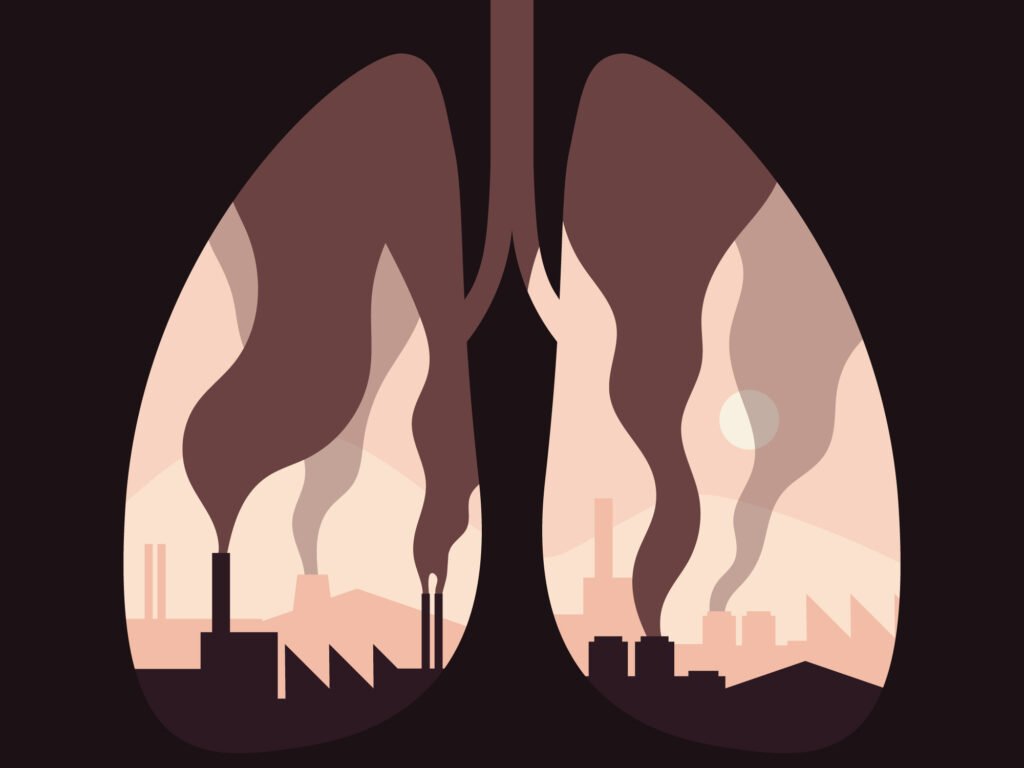
The Union government has informed Parliament that there is no conclusive data establishing a direct correlation between higher air quality index (AQI) levels and lung diseases, even as it acknowledged that air pollution remains a significant trigger for respiratory ailments and related health conditions.
Centre’s response in Rajya Sabha
The clarification came in a written reply tabled in the Rajya Sabha, where the Union Minister of State for Environment addressed concerns raised by a Member of Parliament regarding the health impact of prolonged exposure to hazardous air pollution levels, particularly in the Delhi-NCR region. The minister noted that while air pollution is widely recognised as a contributing factor to respiratory illnesses, existing evidence does not conclusively prove a direct, standalone link between elevated AQI and specific lung diseases.
Concerns over lung health in Delhi-NCR
The question in Parliament highlighted growing public anxiety over reports suggesting that long-term exposure to poor air quality in Delhi-NCR could be leading to conditions such as lung fibrosis and a reduction in lung capacity. It also raised concerns about declining lung elasticity among residents when compared with people living in cities that record better air quality levels. In response, the government maintained that such claims require stronger, conclusive scientific validation to establish a direct causal relationship.
Government acknowledges pollution as a risk factor
While ruling out definitive evidence, the Centre recognised that air pollution acts as a triggering and aggravating factor for respiratory ailments and associated diseases. According to the minister, exposure to polluted air can worsen existing conditions and increase vulnerability, especially among children, women, the elderly and occupationally exposed groups.
Capacity building in public health systems
The government highlighted that it has developed dedicated training modules on air pollution and health for programme managers, medical officers, nurses and nodal officers. These modules are also designed for sentinel sites and frontline workers such as ASHA workers, who play a key role in community-level health outreach. Special focus has been placed on groups that face higher exposure risks, including traffic police, municipal workers, women and children.
Awareness through information campaigns
To strengthen public awareness, information, education and communication (IEC) materials focusing on air pollution-related illnesses have been prepared in English, Hindi and several regional languages. These materials aim to help citizens understand health risks, preventive measures and early symptoms associated with air pollution exposure. The National Programme on Climate Change and Human Health has also created customised IEC content for vulnerable populations, tailoring messages to local contexts.
Early warning systems and forecasts
The Centre informed Parliament that early warning systems and air quality alerts are being disseminated by the India Meteorological Department to states and cities. These alerts, along with air quality forecasts, are intended to help health departments and communities prepare in advance, particularly during periods of severe pollution. Vulnerable groups are encouraged to take precautionary steps based on these advisories.
Clean fuel and sanitation initiatives
The minister also outlined key government schemes aimed at reducing health risks linked to pollution. The Pradhan Mantri Ujjwala Yojana was cited as a major initiative to protect the health of women and children by providing access to clean cooking fuel in the form of liquefied petroleum gas, thereby reducing indoor air pollution. Additionally, the Swachh Bharat Mission was highlighted for its role in improving sanitation and cleanliness across urban and rural areas, with clean air identified as an integral component of the programme under the “Swachh Hawa” initiative.
Ongoing debate on air pollution and health
The government’s statement is likely to fuel continued debate among public health experts, researchers and policymakers on the long-term health impacts of air pollution. While the Centre maintains that conclusive evidence of a direct link is lacking, it has reiterated its commitment to mitigation, awareness and preventive health measures to address the broader risks associated with deteriorating air quality.