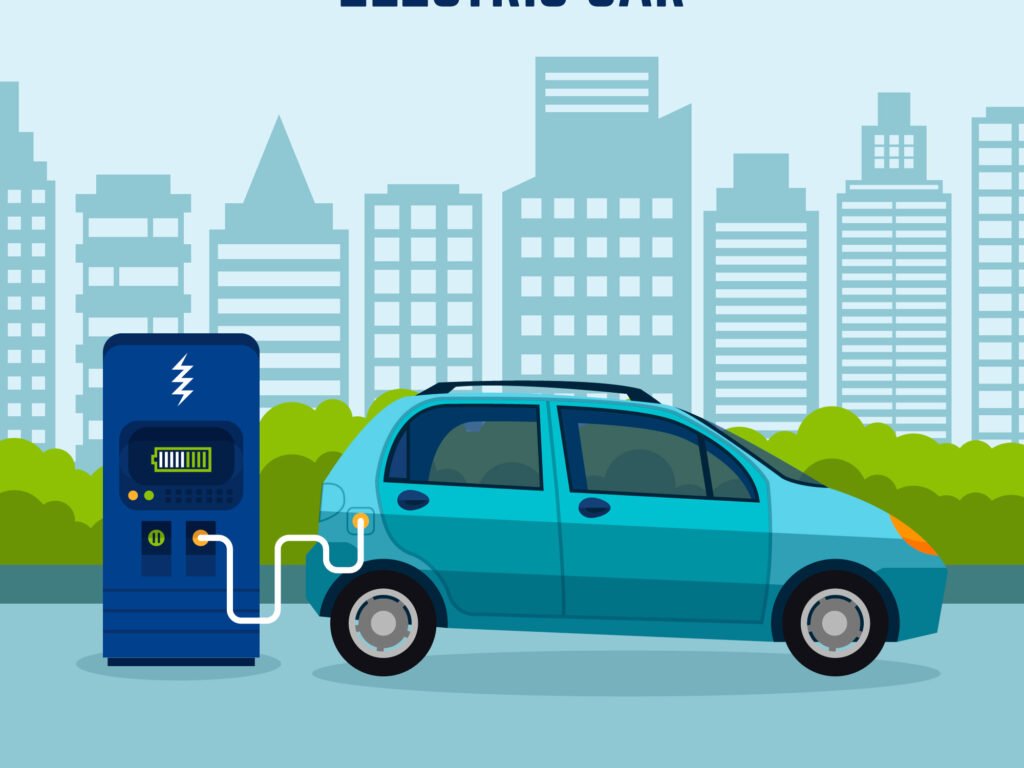
India’s transition to clean and sustainable mobility continues to gain momentum as major national schemes, infrastructure developments, and manufacturing incentives collectively strengthen the country’s electric vehicle (EV) ecosystem. Recent updates highlight substantial progress in the installation of public charging stations, promotion of domestic EV production, and deployment of electric buses across several cities—key components of the government’s long-term vision for greener transport.
A significant milestone in EV infrastructure has been achieved with nearly 40,000 public charging stations now operational across India. According to the project implementation agency for the PM E-DRIVE Scheme, Bharat Heavy Electricals Limited (BHEL), a total of 39,485 EV chargers have been installed nationwide. This includes 8,414 fast chargers, which are crucial for electric cars and help reduce charging time, thereby making EV ownership more convenient. The rapid expansion of charging networks is instrumental in easing range anxiety—one of the major concerns for potential EV buyers.
To ensure consistency, interoperability, and smooth functioning of the national charging grid, the Ministry of Power has introduced detailed guidelines for EV charging infrastructure. These standards support a unified framework for both charging stations and battery-swapping facilities. The policy also encourages private participation by classifying EV charging as an unlicensed activity, allowing entrepreneurs and businesses to invest freely in this growing sector. Further support comes from a dedicated allocation of ₹2,000 crore under the PM E-DRIVE Scheme, earmarked specifically for new public charging stations.
In parallel with infrastructure development, India is strengthening its domestic EV manufacturing capabilities. The Production Linked Incentive (PLI) Scheme for the Automobile and Auto Component Industry, launched in 2021 with a budget of ₹25,938 crore, plays a vital role in boosting production of advanced automotive technologies, particularly electric vehicles and their components. This initiative encourages manufacturers to scale up operations, innovate, and increase localisation of key EV systems.
To complement this, the PLI Scheme for Advanced Chemistry Cell (ACC) Battery Storage, backed by ₹18,100 crore, aims to create a competitive ecosystem for large-scale manufacturing of advanced battery technologies. With a target of building 50 GWh of domestic ACC capacity, the scheme supports India’s ambition to reduce dependence on imported batteries and establish a strong, self-reliant EV supply chain.
Another major policy push comes from the PM E-DRIVE Scheme, launched in September 2024 with a total outlay of ₹10,900 crore. It provides support for a wide range of electric vehicles including two-wheelers, three-wheelers, trucks, ambulances, and buses. The scheme also covers the development of public charging stations and the upgrading of automotive testing facilities to meet global standards.
Public transport electrification is gaining traction as well. Through an innovative aggregation model managed by Convergence Energy Services Limited (CESL), 10,900 electric buses have been allocated to five major cities under Phase I, with bids for operator selection already opened. An additional 2,900 e-buses have been sanctioned in Phase II. These deployments are supported further by the PM e-Bus Sewa Payment Security Mechanism (PSM), which ensures timely payments to operators and facilitates smoother adoption by public transport authorities.
The government has also introduced the Scheme for Promotion of Manufacturing of Electric Passenger Cars in India (SPMEPCI) to promote indigenous production of electric cars. The scheme requires significant investment commitments and increasing domestic value addition over a five-year period, encouraging long-term manufacturing growth.
While India has not set a specific national target for EV numbers, the coordinated efforts across infrastructure, manufacturing, and public transport clearly demonstrate a focused strategy to accelerate EV adoption. As policies mature and investments scale up, India is steadily building one of the world’s most dynamic electric mobility landscapes—bringing cleaner air, reduced fuel imports, and a more sustainable future within reach.