On the occasion of World Water Day, the Hinduja Foundation, the philanthropic arm of the Hinduja Group, shared the growing impact of its flagship Jal Jeevan initiative, a programme that has steadily reshaped water security across rural India.
Over time, this initiative has facilitated the recharge of more than 5 trillion litres of groundwater while strengthening irrigation systems across 117,620 hectares of farmland, creating a ripple effect that has improved agricultural productivity, strengthened livelihoods, and brought greater stability to millions living in water-stressed regions spread across 16 states.
Raman Kalyanakrishnan, CEO, Hinduja Foundation, said, “Water security is closely linked to livelihood security in rural India. Through the Hinduja Group’s Jal Jeevan initiative, we are working with communities to build sustainable water infrastructure that improves domestic water access, supports agriculture, and strengthens resilience against climate uncertainty.”
At the heart of this effort lies a simple but powerful understanding—that water security and livelihood security in rural India are deeply intertwined.
What makes Jal Jeevan particularly impactful is its integrated approach to water management. Instead of addressing water scarcity in isolation, it looks at the entire ecosystem—reviving watersheds and springsheds, restoring traditional water bodies, and introducing practical solutions such as rainwater harvesting systems and water ATMs. These efforts are complemented by the promotion of climate-resilient agricultural practices, ensuring that the benefits extend beyond immediate water access and translate into long-term resilience.
The results are visible not just in numbers but in everyday life. Across thousands of villages, the burden of water scarcity has eased, crop yields have improved, and livestock management has become more efficient.
One of the most meaningful changes has been the reduction in time and effort spent especially by women and families—in fetching water, allowing them to focus on other aspects of daily life and economic activity. Equally important is the sense of ownership the programme fosters, with communities actively participating in maintaining water assets, ensuring that the benefits continue long after the initial implementation.
Today, the initiative has touched around 6 million lives, spanning nearly 4,000 villages. It has led to the revival or recharge of about 20,000 open wells, the installation of 4,000 rooftop rainwater harvesting systems, and the restoration of 125 lakes and 450 springs. In regions like Uttarakhand, where 267 springs have been rejuvenated, the programme has significantly strengthened water security in fragile Himalayan ecosystems.
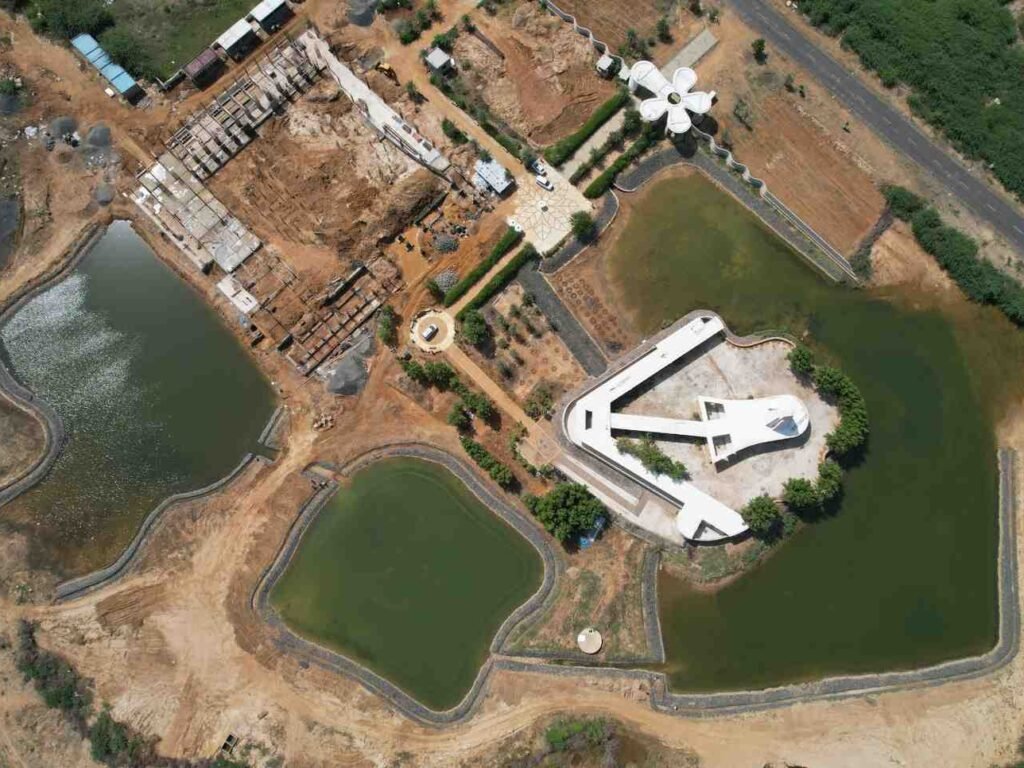
One particularly striking example of its impact can be seen at the Holy Jhulelal Tirthdham campus in Kutch, Gujarat. Spread across 40 acres, this site has been transformed through the development of a network of freshwater reservoirs around the Shri Jhulelal Temple. This intervention has not only revived local ecosystems but has also enhanced resilience against rising sea levels while supporting biodiversity in the region.
The programme’s work spans some of the most water-stressed geographies in India, where it has enabled the creation of ponds, check dams, recharge pits, and other water-harvesting structures that collectively contribute to groundwater replenishment on a massive scale. Alongside this, improvements in agricultural water access have led to higher productivity and increased household incomes, while sanitation and hygiene initiatives have helped foster healthier communities.
As climate-related challenges continue to intensify, the Hinduja Foundation is looking ahead with a clear commitment to expand the reach of Jal Jeevan. By strengthening partnerships with government bodies, civil society organisations, and local institutions, it aims to build scalable and sustainable solutions that can secure water resources for future generations while continuing to uplift rural communities across India.