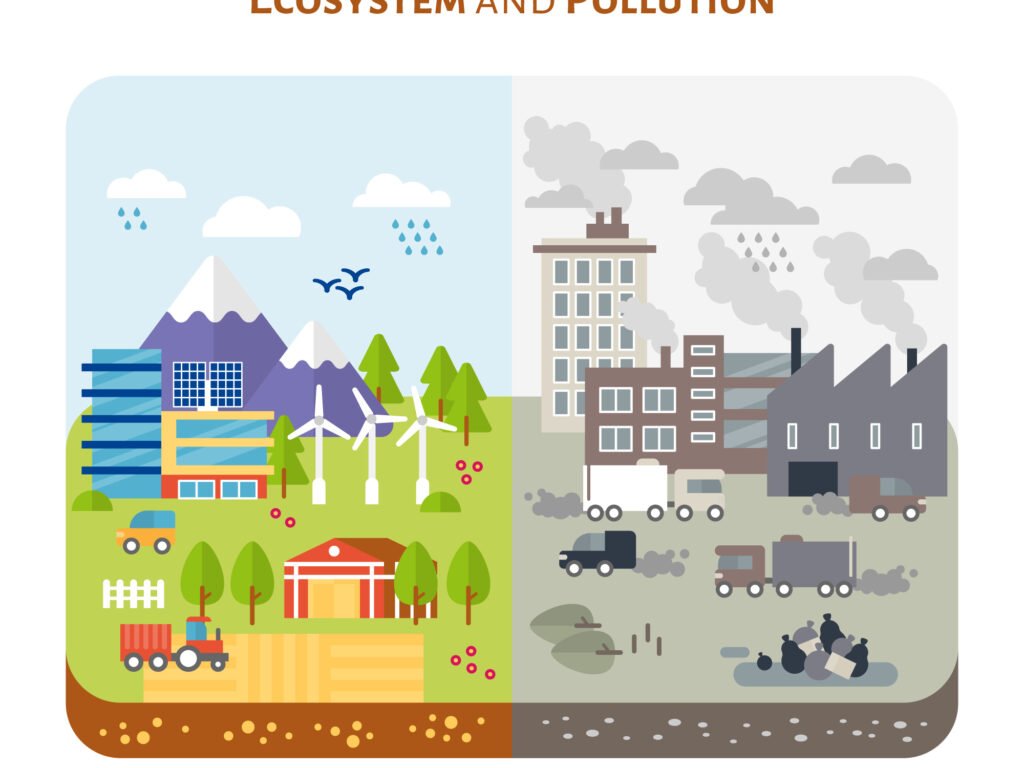
Environmental degradation is claiming millions of lives and costing the global economy trillions of dollars every year, according to the United Nations Environment Programme’s Global Environment Outlook, Seventh Edition.
Released during the seventh session of the United Nations Environment Assembly in Nairobi, the report is the most comprehensive global environmental assessment to date. It draws on the work of 287 scientists from 82 countries and assesses the combined impacts of climate change, biodiversity loss, land degradation, desertification, and pollution and waste.
The assessment finds that continuing with business as usual development pathways will significantly worsen environmental and economic damage, undermining national prosperity and human well-being. Rising greenhouse gas emissions, land degradation and pollution are already placing severe pressure on ecosystems, public health and global economic stability.
However, the report highlights that a decisive shift towards sustainable development could deliver substantial economic and social benefits. Transforming five key systems — economy and finance, materials and waste, energy, food systems and the environment — could generate global macroeconomic gains of at least US$20 trillion per year by 2070, with benefits continuing to grow thereafter.
The report emphasises the need to move beyond traditional GDP metrics towards indicators that also measure human and natural capital. Such an approach would support circular economy models, accelerate energy decarbonisation, promote sustainable agriculture and enable large-scale ecosystem restoration.
Two transformation pathways are outlined, focusing on changes in consumption behaviour and the accelerated use of technology and efficiency improvements. Under these scenarios, economic benefits begin to emerge around 2050 and could rise sharply in the decades that follow.
The outlook also projects major social and health gains. Up to nine million premature deaths could be avoided by 2050 through actions such as reducing air pollution. By mid-century, nearly 200 million people could be lifted out of undernourishment and more than 100 million out of extreme poverty.
To reach net-zero emissions by 2050 and adequately fund biodiversity conservation and restoration, the report estimates annual global investment of around US$8 trillion is required. The cost of inaction, however, is projected to be far higher.
The report outlines wide-ranging reforms across five critical areas. These include reforming economic incentives that harm nature, expanding circular production and consumption models, decarbonising energy systems, transforming food systems to reduce waste and improve nutrition, and accelerating conservation, climate adaptation and ecosystem restoration.
Current trends underline the urgency of action. Greenhouse gas emissions have continued to rise since 1990, extreme weather events linked to climate change are causing mounting economic losses, and between 20 and 40 per cent of global land is already degraded. Pollution is responsible for an estimated nine million premature deaths each year, while plastic waste and toxic chemicals continue to accumulate.
The Global Environment Outlook calls on governments, businesses, financial institutions, civil society and Indigenous communities to work together to deliver integrated solutions. The report concludes that coordinated and inclusive action is essential to secure a healthier planet, stronger economies and improved quality of life for future generations.