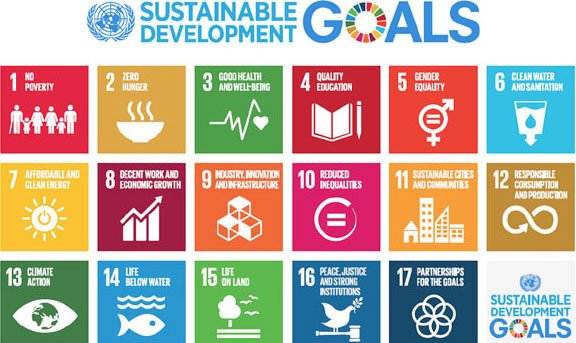
A new report by the Stockholm Environment Institute (SEI) and the NYU Center for Environmental and Animal Protection (CEAP) warns that the United Nations’ Sustainable Development Goals (SDGs) are fundamentally incomplete without the systematic inclusion of animal health and welfare. According to the authors, this omission is undermining global progress on human wellbeing, environmental protection, and social equity, while heightening the risks of future crises.
The report, Integrating Animal Health and Welfare into the 2030 Agenda and Beyond, released on 9 December, highlights how animal welfare has long been sidelined within the SDG framework despite growing recognition of the One Health approach. One Health emphasises the interconnectedness of human, animal, and environmental health, and has gained global traction in the wake of the Covid-19 pandemic and other zoonotic threats. Yet, the SDGs continue to overlook animal health as a core pillar of sustainable development.
The report’s release coincides with the 7th UN Environment Assembly (UNEA-7) in Nairobi, Kenya, where ministers from around the world are gathering to address urgent environmental challenges. SEI Senior Scientist and co-lead author Cleo Verkuijl stressed that the current global agenda is at risk of failing unless animal welfare is brought into mainstream policymaking. “If we want a coherent and effective sustainable development agenda, we can no longer treat animal welfare as an afterthought,” she said. “Improving the wellbeing of animals can help tackle the root causes of many global crises – from pandemics to climate change – while improving livelihoods and public health.”
According to the report, neglecting animal health and welfare amplifies major global risks. These include zoonotic disease emergence, antimicrobial resistance, biodiversity loss, and ecosystem degradation. At the same time, the absence of meaningful animal welfare policies prevents the adoption of solutions that could benefit both people and animals. With the world already off track to meet the 2030 Agenda, the authors argue that the next five years are critical for aligning environmental, public health, and animal welfare goals.
Jeff Sebo, Director of CEAP and co-lead author, said that UNEA-7 presents an important opportunity. “As UNEA-7 brings leaders together in Nairobi, we have an opportunity to take practical steps to embed animal health and welfare into global policy, strengthen action for the next five years, and shape a post-2030 agenda that benefits humans, animals, and the environment.”
The report proposes three pathways for integrating animal welfare into global governance. The first calls for strengthening animal welfare within current SDG implementation, for example by incorporating wildlife coexistence into urban planning and environmental policy under SDG 11. The second recommends the introduction of new SDG targets and indicators that explicitly capture human–animal–environment linkages, such as monitoring zoonotic spillover risks or phasing out harmful agricultural subsidies. The third and most ambitious option is the creation of a dedicated SDG on animal health and welfare, which would elevate the issue to the level of other global priorities and reinforce One Health principles.
Priority areas for action include transforming industrial animal agriculture and global fishing systems, embedding animal welfare in conservation and anti-trafficking efforts, and incorporating welfare assessments into infrastructure development and technological innovation. The report also emphasises the need for more education and research that support holistic, One Health-aligned solutions.
The report highlights stark statistics underscoring the urgency of reform. An estimated 74% of farmed land animals worldwide are raised in intensive or factory-farm conditions, and a vast majority of farmed fish experience the same. Around 75% of emerging infectious diseases in humans originate from animals, many linked to how societies farm, trade, and interact with wildlife. Meanwhile, most medically important antibiotics are used on farmed animals, accelerating antimicrobial resistance, which now kills more people annually than HIV/AIDS or malaria.
The authors argue that rapid technological and environmental changes — from artificial intelligence to deep-sea exploration — are outpacing global governance structures. As such, a proactive, forward-looking approach rooted in One Health is essential.
Momentum is already building. The UN Environment Assembly has acknowledged the relevance of animal welfare to sustainable development, while initiatives such as the One Health High-Level Expert Panel and the Pandemic Agreement signal growing global commitment to coordinated action. A technical supplement accompanying the report offers detailed proposals for refining SDGs 1–17 and introduces potential targets for a new SDG 18 dedicated to animal health and welfare.