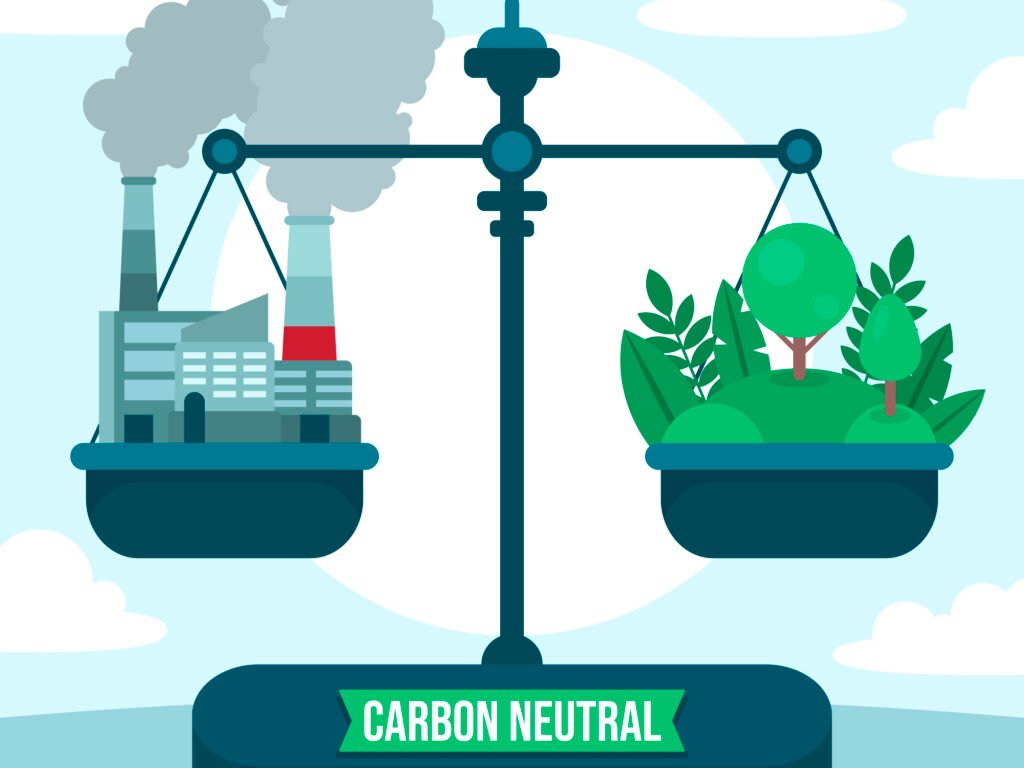
India has reported a significant 7.93% reduction in national greenhouse gas (GHG) emissions in 2020 compared with 2019, according to the country’s Fourth Biennial Update Report (BUR-4) submitted to the UNFCCC in 2024. The decline is largely attributed to a 5.7% drop in energy-sector emissions and a 9.5% reduction in industrial process and product-use emissions.
India’s climate progress continues to align strongly with its enhanced Nationally Determined Contributions (NDCs). The nation has already achieved more than 50% of its installed electric power capacity from non-fossil fuel sources, reaching this goal five years ahead of the 2030 deadline. Between 2005 and 2020, India reduced the emissions intensity of its GDP by 36%, and created an additional carbon sink of 2.29 billion tonnes of CO₂ equivalent through increased forest and tree cover.
The government’s Long-Term Low-Carbon Development Strategy (LT-LEDS), submitted in 2022, outlines strategic transitions across electricity, transport, industry, urban systems, carbon removal technologies, forestry and finance to achieve net-zero emissions by 2070.
To accelerate renewable energy deployment, the Ministry of New & Renewable Energy (MNRE) has expanded competitive bidding guidelines, strengthened Renewable Purchase Obligations, and enabled 100% FDI. Key schemes—including PM-KUSUM, PM Surya Ghar Muft Bijli Yojana, the National Green Hydrogen Mission, VGF for offshore wind, and solar park development—are driving national clean energy adoption.
India is also making rapid strides in green hydrogen, with four Hydrogen Valley Innovation Clusters sanctioned and 23 R&D projects approved under the National Green Hydrogen Mission. Transmission infrastructure is being reinforced through Green Energy Corridors, ISTS charge waivers, and long-term planning for renewable integration.
Electric mobility adoption is rising under the National Electric Mobility Mission Plan, supported by the FAME scheme, PLI incentives, lower GST rates, green number plates, and road tax waivers by States. The Ministry of Power has also initiated steps to scale up EV charging infrastructure nationwide.
India’s coordinated policy reforms, technological investments, and sector-wide energy transitions are firmly steering the country towards its 2030 climate goals and long-term net-zero vision.