Corteva Agriscience is accelerating its biologicals strategy in India as rising climate stress, increasing pest resistance and government backing for natural farming push demand for sustainable crop protection solutions. During her visit to India, Brook Cunningham, Corteva’s President for the Asia-Pacific region, indicated that the company is placing major emphasis on biocontrols and biostimulants designed to support farmers as environmental pressures intensify.
India positioned as a key global market for biologicals
Cunningham stated that India has become one of the company’s most critical markets for biological products due to strong policy support for natural farming and a favourable stance towards gene-editing technologies. She noted that biocontrols are currently the most critical need among farmers and suggested that no organisation has yet been able to deliver these at large scale. She also highlighted Corteva’s significant investment in microbial technologies that can both suppress pests and strengthen plant defences.
Climate change is accelerating the shift toward biological solutions, with rising temperatures, irregular rainfall, droughts, floods and faster pest migration posing new threats to yields. Biostimulants, which improve soil health and enhance plant tolerance, are becoming increasingly important for Indian farmers aiming to build climate resilience.
Cunningham explained that biologicals should not be viewed as a replacement for chemical crop protection, but rather as part of an integrated pest management system. She emphasised that traditional chemistry still prevents substantial losses in fruit and vegetable crops and will remain an essential component of modern agriculture.
Supporting food security for a growing population
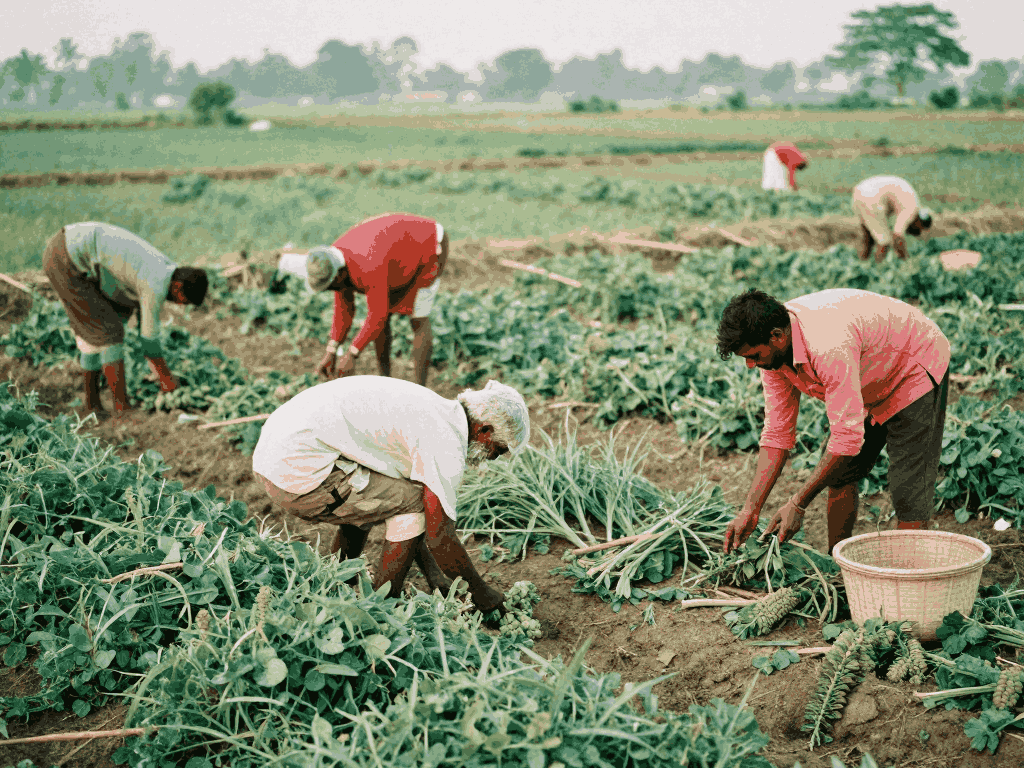
India’s 150 million smallholder farmers—most cultivating less than two hectares—stand to benefit significantly from the adoption of biologicals. Corteva estimates that small farmers working on plots as low as 0.3 hectares could achieve yield increases of 15–20 per cent through biological solutions. With just 2.4 per cent of global agricultural land sustaining a population of 1.4 billion, India plays a vital role in global food security.
Although Brazil currently leads global biological adoption due to high pest pressure, India offers unique potential. Government initiatives supporting natural farming and gene-editing innovation are enabling rapid deployment of advanced seed traits and biological crop protection products.
Investment, R&D and local partnerships driving expansion
India is central to Corteva’s target of reaching USD 4.1 billion in operating EBITDA by 2026. The country represents the company’s largest seed market in the Asia-Pacific region, which contributes around 10 per cent of global revenue. Corteva currently generates between ₹1,500 and ₹2,000 crore annually in India.
The company reinvests 8 per cent of global revenue into research and development—around USD 1.4 billion a year. Its two major research hubs in Telangana are instrumental in developing new seed technologies and biologicals. Cunningham noted that artificial intelligence is being used to accelerate biological product development and reduce costs.
To speed up the adoption of biologicals, Corteva is expanding partnerships with Indian innovators through distribution agreements, joint research programmes, equity investments and joint ventures. Cunningham stated that despite the company’s substantial R&D spend, collaboration with local partners remains essential, particularly for regulatory navigation and manufacturing capabilities.
Regulatory challenges slowing progress
However, regulatory delays remain a major obstacle. India’s Fertiliser Control Order approval process is significantly slower than systems in countries such as Australia. Cunningham commented that inconsistent or non-science-based regulatory decisions make it difficult for companies to justify long-term R&D investment. Corteva continues to work with governments across its 17 Asia-Pacific markets to encourage predictable, science-aligned regulatory frameworks.
Biologicals form a cornerstone of future growth
Corteva’s broader pest management strategy includes climate-resilient hybrids in corn and mustard, alongside strong portfolios in rice and millets. Its integrated model combines chemical and biological crop protection to tackle resistance and support sustainable farming. The company projects that its innovations could raise farmer incomes by 20–30 per cent without increasing input costs.
Cunningham emphasised that with a growing global population, accelerating climate change and rising pest resistance, advanced agricultural technology will remain essential. Corteva aims to position biologicals at the centre of its long-term strategy for India and the wider Asia-Pacific region.