As the global climate talks pick up in Belém, Brazil, at the 2025 United Nations Climate Change Conference, the mood is one of renewed optimism and shared purpose. The 30th Conference of the Parties (COP30) marks not just another milestone in climate diplomacy but a turning point in global cooperation. It represents an opportunity to realign our shared focus from crisis to collaboration, from pledges to progress. The summit will mark the first time that countries unveil their third-generation Nationally Determined Contributions (NDCs 3.0), setting a more ambitious and actionable roadmap toward the Paris Agreement’s 1.5 °C goal.
For India, it is not just a seat at the table but a chance to lead from the front. As a voice for the Global South, India has demonstrated how a developing nation can power its growth through clean energy, innovation and inclusivity. While being the fastest growing major economy in the world, India has remained true to its ecological conscience. A pioneer in fostering renewable energy adoption, India stands ready to inspire the world with a model of sustainable progress rooted in both ambition and equity. India demonstrated quantifiable progress, steadfast commitment and prudent leadership in achieving its two primary Paris Agreement climate targets years well ahead of the 2030 deadline.
Pioneers of Sustainable Development: India’s Climate Undertaking
By October 2023, India’s non-fossil fuel capacity had already reached 43.81%, surpassing its initial 2015 pledge, and by June 2025, it exceeded its enhanced target with over 50% of installed power capacity coming from non-fossil sources, which was five years earlier than initially committed. Equally impressive is India’s achievement in reducing emissions intensity, cutting 33% of its GDP-linked emissions by 2019, more than a decade ahead of target. Demonstrating that rapid economic growth and emissions reduction can indeed coexist, India now aims for a 45% reduction by 2030, highlighted as part of India’s Panchamrit five-point pledge laid out at COP26 in Glasgow.
On the natural front, the country has also created a carbon sink of 2.29 billion tonnes of CO₂ equivalent, moving steadily toward its 2030 target of 2.5–3 billion tonnes through afforestation and tree-cover expansion. These advances are not isolated wins but the outcome of robust policies, from the exponential 41-fold growth in solar capacity since 2014 to nationwide initiatives like UDAY, PM-KUSUM, and the Green Credit Programme, all working in tandem to align growth with green transition. The government’s PM Surya Ghar scheme, targeting one crore rooftop solar installations, the 20% ethanol blending milestone achieved six years ahead of schedule and India’s leadership in global coalitions like the International Solar Alliance (ISA) and One Sun, One World, One Grid (OSOWOG) further underscore that India’s climate promise is based not merely on projection, but performance.
India’s Climate Vision: Ambition with Action
India’s climate commitments are both bold and pragmatic. The country aims to reach net-zero emissions by 2070, while meeting 50 percent of its energy demand from renewables by 2030. It has already surpassed several interim milestones, achieving over 180 GW of renewable capacity, according to the Ministry of New and Renewable Energy and positioning itself as the world’s third-largest producer of solar power. This clean energy revolution has been driven by transformative national programs such as Mission LiFE (Lifestyle for Environment) and the National Green Hydrogen Mission, which together signal India’s intent to drive change from the grassroots to the grid. The Green Hydrogen Mission targets production of 5 million tonnes annually by 2030, which is poised to support the decarbonisation of key industrial sectors while turning India into a global hub for clean energy exports.
The Circular Economy: India’s Next Sustainability Frontier
Beyond energy, India is quietly reshaping its manufacturing and urban ecosystems through circular-economy initiatives. The recycling of metals, plastics and e-waste has grown exponentially, supported by policy frameworks under the Ministry of Environment and NITI Aayog. From textile upcycling to waste-to-energy plants, these efforts embody a broader national shift from linear consumption to regenerative growth.
Cities like Indore and Pune now stand as global examples of how smart governance, technology, and citizen participation can together create cleaner, more sustainable urban spaces. This circular mindset is also spreading to industries such as automotive, electronics and construction. Today, ‘Make in India’ is increasingly synonymous with ‘Sustainably Made in India’.
Industry and Policy: Partners in Progress
India’s climate journey is being co-written by policymakers and businesses. From steel to cement, from startups to legacy conglomerates, industry is now at the forefront of low-carbon innovation. Public-private partnerships are driving investments in battery storage, carbon capture, and green logistics. The government’s Production-Linked Incentive (PLI) schemes have further catalysed domestic manufacturing of solar modules and electric vehicles, aligning growth with green outcomes. This collaboration is what gives India’s climate roadmap its credibility. It ensures that climate ambition is not confined to policy documents but reflected in boardrooms, factory floors and the daily life of every Indian.
COP30: India’s Global Moment
As the world prepares for COP30, India’s message is clear. Growth and sustainability are not opposing forces but complementary strengths. Its achievements in renewable energy, green hydrogen, and circular innovation showcase a pathway for other emerging economies to emulate. At a time when the global community seeks solutions that balance prosperity while also safeguarding Earth’s future, India stands ready to lead. Not by rhetoric, but by results. COP30 is not just a platform for pledges. It is a moment for nations to draw inspiration from one another’s progress. And in that shared pursuit of a greener future, India’s light shines incandescent with potential and promise.
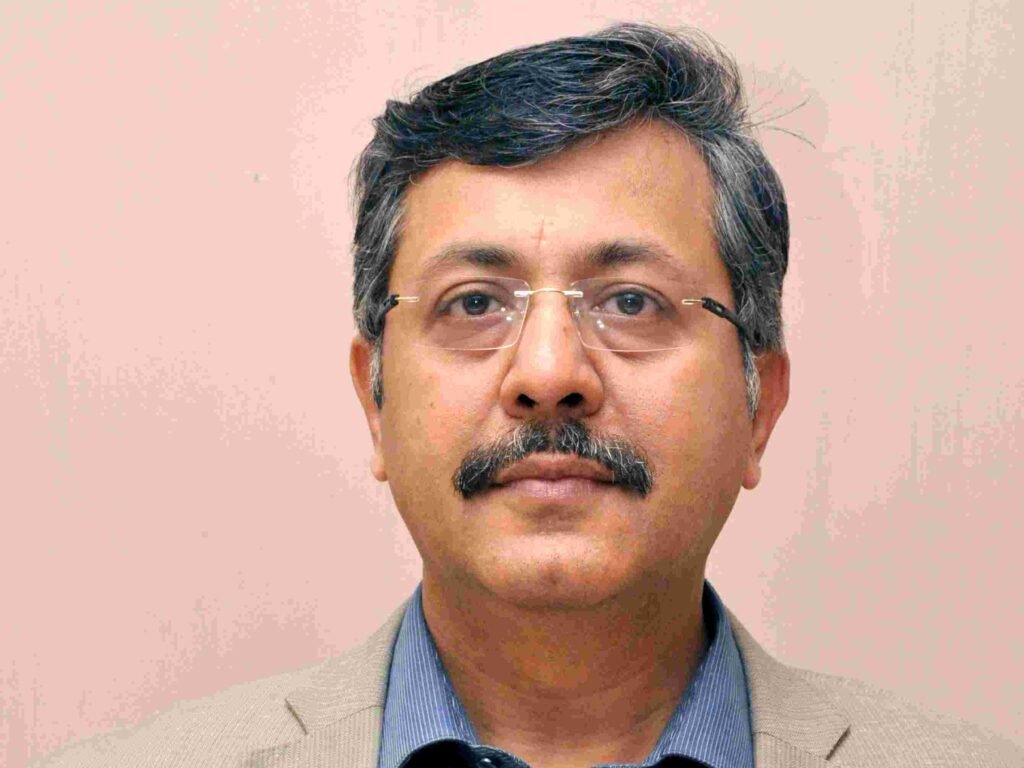
- Dr Rajeev Singh is Director General of Indian Chamber of Commerce.